JAMES SUCKLING | our ratings of vintage 2024

Stuart Pigott via James Suckling
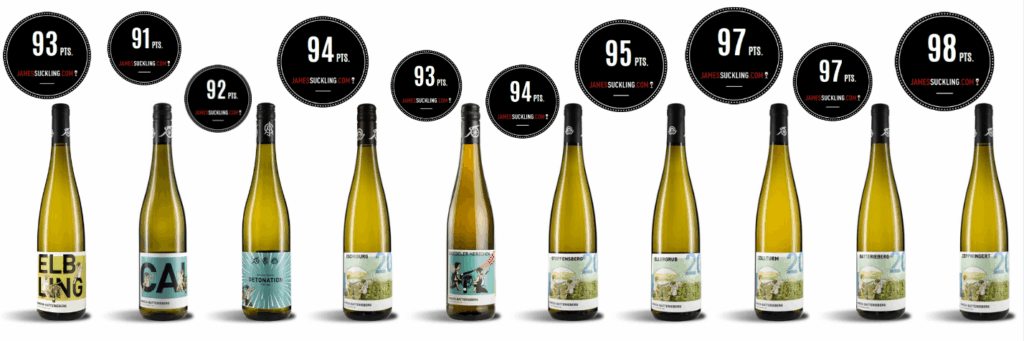
2024 ZEPPWINGERT Riesling | 98 points

The way this wine effortlessly marries enormous concentration with wonderful lightness and subtlety is breathtaking. The peach and Amalfi lemon flavors seem to flow into one another. Then comes the shining slatey notes of the extremely focused finish. Fermented and matured in one 500-liter oak cask, so very limited production. From organically grown grapes. Drink or hold.

2024 BATTERIEBERG Riesling | 97 points

Just smelling this extraordinary dry Mosel wine is like being beamed back to the 18th century, and with every swirl of the glass there are more mint and Amalfi lemon zest aromas. And that’s only what’s on the surface. This is a deep well of wet-stone minerality. Extremely long, focused finish. From organically grown grapes. Drinkable now, but best from 2027.

2024 ZOLLTURM Riesling | 96 points

At first very flinty, then with aeration a wide spectrum of candied citrus aromas unfurls, with hints of dried tarragon and sage. Very concentrated, with a complex interplay of leesy creaminess and herbal, minerally character on the medium-bodied palate. Very long, intensely salty finish. From organically grown grapes. Drinkable now, but best from 2026.

2024 ELLERGRUB Riesling | 95 points

This needs a moment to open up, but then it shows lovely aromas of orange blossoms. Seriously concentrated and wonderfully silky on the graceful, medium-bodied palate. Then touches of orange pith bitterness and slatey minerality kick in and give this incredible tension in the very long finish. From organically grown grapes. Drinkable now, but best from 2027.

2024 STEFFENSBERG Riesling | 94 points

This youthful wine shows impressive peachy ripeness with touches of flint, dried pears and apples. It needs to fully integrate, and each swirl of the glass aids this process. Then comes a wave of dried sage, flint and yeast in the long, complex finish. From organically grown grapes from ungrafted vines. Drinkable now, but best from 2027.

2024 BRIEDELER HERZCHEN Riesling | 93 points

Very cool, reserved, crisp and racy. On one level this is a typical 2024 Mosel wine, but on another it is radical, with positive austerity on the bone-dry, barely medium-bodied palate. Flinty right through the long, cool finish. From organically grown grapes. Drink or hold.

2024 ESCHEBURG Riesling | 94 points

Fascinating nose of candied oranges, dried apricots, dried flowers and flint. Sleek and compact, with excellent concentration and complexity on the medium-bodied palate. A remarkable expression of this underrated site. The salty minerality comes through in the expressive finish. From organically grown grapes. Drink or hold.

2024 DETONATION Riesling | 92 points

The dried apple and candied orange aromas are married to steely acidity on the barely medium-bodied palate. On the austere side, but with plenty of drive and a touch of orange rind bitterness in the rather bold finish. From over 40-year-old vines. Drink or hold.

2024 CAI Riesling | 91 points

With its aromas of licorice, candied oranges, quince and flint, this is different from almost everything else in this entry-level category. It’s a sleek, light-bodied dry riesling with stacks of dried herb, preserved lemon and slate character. Long, very crisp finish. Drink or hold.

2024 ELBLING | 93 points

The nutty apple aromas of this unique wine are compelling, although it’s light-bodied. Impressive depth on the mid-palate and long, crisp, filigreed finish. Hard to believe this has just under 9% alcohol because of the serious slaty minerality. Long, cool finish. From organically grown grapes. No sulfites added. Unfiltered. Drink now.
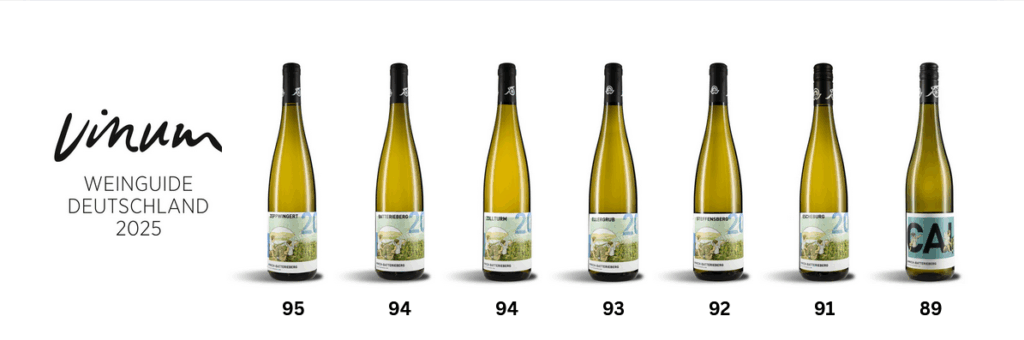
VINUM WINEGUIDE 2025

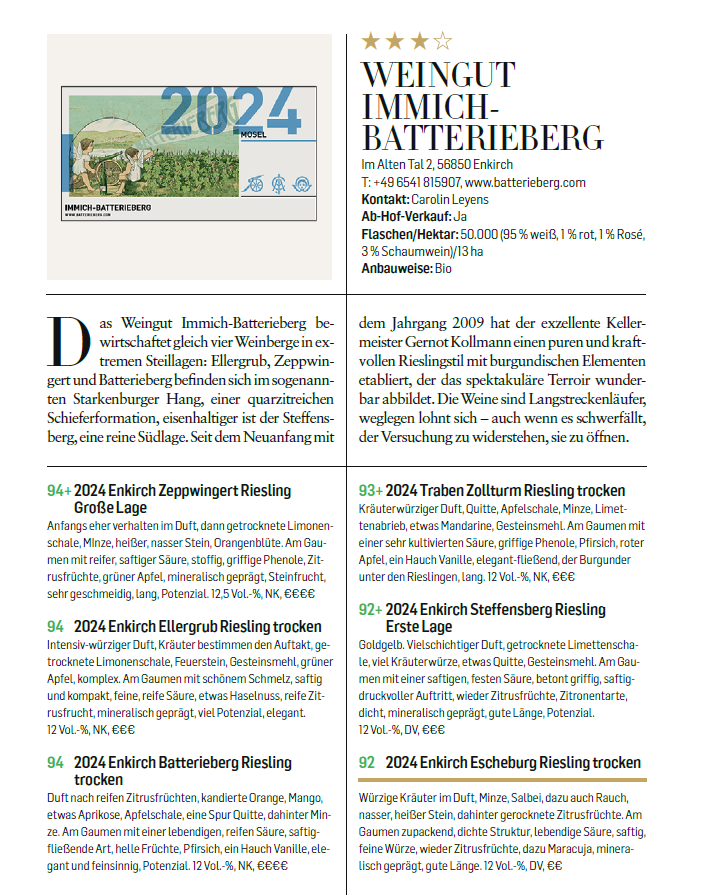
Was war passiert? Waren es unsere Geschmackspapillen an den beiden Tagen der Probe oder ist es nur der Jahrgang, der uns eher entgegenkommt? Jedenfalls konnten wir nicht anders, als diesen strukturierten Weinen hohe Punkte zu geben, die da vor uns standen.

Schon der CAI ist zum Vorjahr qualitativ einige Stufen nach oben gestiegen. Ein Wein, der zu 80 Prozent im Edelstahl und zu 20 Prozent im Holz ausgebaut wird, bevor er cuvéetiert wird. Säurefrische und Spannung zeichnen ihn aus.

Schon der Riesling Escheburg 2024 wird von einem hohen Anteil wurzelechter Reben aus 60 Jahre alten Parzellen gewonnen. Der animierende Säuredruck, der dem Wein erhöhte Spannung mitgibt, legt Zeugnis davon ab.

Mit jedem nächsten Wein schraubten sich die Punktzahlen nach oben, bis mit 95 das Ende der Fahnenstange erreicht war. Und diese erklommen sowohl Batterieberg 2024, als auch der Zeppwingert 2024, beide aus Enkirch.

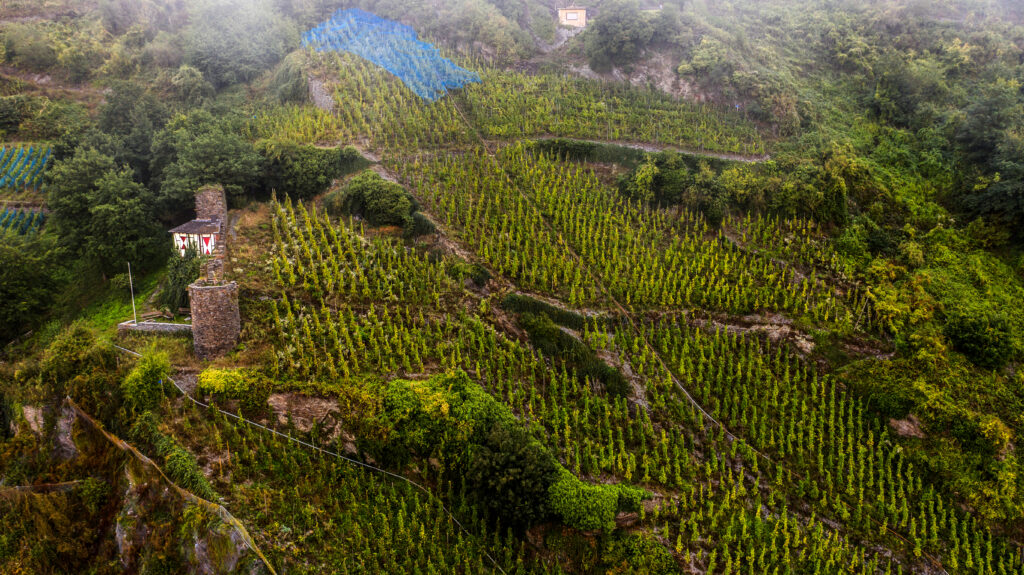
Der Batterieberg, dessen Urbarmachung zwischen 1841 und 1845 vollzogen wurde, hat die Größe von 1,1 Hektar, plan gemessen. Die Trauben des Hangfußes werden für die Produktion dieses Weins nicht verwendet. Seidigen Glanz versprüht dieses aus lediglich 25 Hektoliter pro Hektar hergestellte Edelgewächs.

Der Zeppwingert lässt sich den Schneid nicht abkaufen und zieht gleich mit erhöhter Fruchtkonzentration und dadurch bedingter Festigkeit. Kein Wein, so sagt Gernot Kollmann, Betriebsleiter und Kellermeister, liegt über vier Gramm pro Liter Restsüße. In diesem Jahr Jahr wird die Opulenz auf das Angenehmste im Zaun gehalten und geführt. Es strahlen wieder vier Sterne über dem Enkircher Weingut!

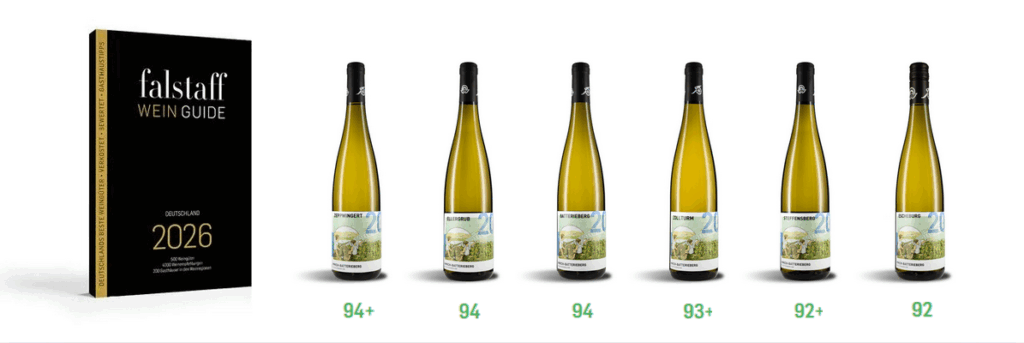
2024 ZEPPWINGERT Riesling | 95 Punkte

2024 BATTERIEBERG Riesling | 95 Punkte

2024 ZOLLTURM Riesling | 94 Punkte

2024 ELLERGRUB Riesling | 93 Punkte

2024 STEFFENSBERG Riesling | 93 Punkte

2024 ESCHEBURG Riesling | 91 Punkte | VINUM TIPP!

2024 CAI Riesling | 89 Punkte

What is the „Cool Climate“ Trend?

The Mosel is called the „mother“ of the Cool Climate trend because it was historically the first and most significant wine region to systematically demonstrate the potential of cooler climate zones for wine production.


Techniques and traditions that are now characteristic of Cool Climate winemaking emerged along the Mosel as early as the Middle Ages. The steep slate slopes with their southern exposure maximize sun exposure, while the cool climate ensures slow ripening and pronounced acidity structure – a hallmark of high-quality Cool Climate wines.

Riesling, which finds perhaps its purest expression along the Mosel, became the archetype of Cool Climate wine: elegant, mineral, with vibrant acidity and complex aromatics. This style inspired winemakers worldwide to seek similar conditions – from the Finger Lakes region in New York to the Rheingau and Tasmania.


Particularly influential was the Mosel philosophy of „terroir-driven winemaking“: the conviction that cool sites with mineral soils can produce wines of particular finesse and longevity. This mindset revolutionized international winemaking from the 1980s onwards, as quality was increasingly prioritized over quantity. The Mosel proved that great wines don’t necessarily have to come from warm regions – a paradigm shift that made the modern Cool Climate trend possible.

Today, the wine industry worldwide faces the challenge of reconciling centuries-old traditions with the necessity of adapting to climate change. Flexibility and innovation will be crucial – while simultaneously preserving the cultural identity and quality standards of wine regions.


Climate change is fundamentally altering winemaking and has various effects on wine:
• shifted vegetation periods: Earlier flowering, earlier ripening, and earlier harvests (sometimes 2-4 weeks)
• higher sugar content: Leads to higher alcohol levels in wines
• declining acidity levels: Impairs freshness and aging potential
• changed aroma spectra: Fewer typical varietal aromas, more ripeness-related aromas

Southern wine regions are particularly affected, but classic German wine regions are also suffering from this development.
DThe term „Cool Climate“ in relation to wine has its origins in the 1960s and emerged in the so-called „New World“ of winemaking, in countries like Australia, New Zealand, the USA, or Canada. At that time, winemakers began specifically developing cooler regions for viticulture and highlighting the special characteristics of these wines


In Europe, especially in classic wine countries like Germany or France, winemaking in cooler regions had always existed, but the targeted positioning and conscious emphasis on „Cool Climate“ character only became popular with the international trend from the New World.
Since the 1990s, the topic has gained significant importance in the global wine scene, not least due to climate change and the associated changes in traditional and new wine regions.

The development of „Cool Climate“ winemaking shows several interesting trends:
1. new growing regions like England, Tasmania, New Zealand, northern parts of Germany, higher elevations in Chile and Argentina are developing
2. even traditional wine regions must adapt to warmer conditions – whether through higher elevations, north-facing vineyards, or new grape varieties
3. consumers increasingly appreciate the elegance, freshness, and lower alcohol content of these wines
4. particularly varieties like Riesling, Chardonnay, Pinot Noir, and Sauvignon Blanc benefit from cooler climates and are at the center of the „Cool Climate“ approach
5. „Cool Climate“ winemakers are often pioneers in sustainable and organic cultivation methods, as they must work with natural conditions
6. these wines often position themselves in the premium segment, as production costs are higher and yields are lower

The Mosel is a classic example of a „Cool Climate“ wine region for several important reasons:
Geographic and Climatic Factors
• northern location: Located at approximately 50° north latitude, the Mosel is at the northern boundary of commercial viticulture
• cool climate: Average temperatures during the growing season are significantly lower than in more southern wine regions – the annual average temperature typically ranges between 9-10°C
• longer ripening time: The grapes require a longer growing season here, leading to more complex aromas
Terroir Characteristics
• river as climate regulator: the Mosel itself acts as a temperature buffer and reflects sunlight onto the vineyardsbr
• steep slate slopes: these store warmth during the day and release it at night, partially compensating for the cooler climatebr
• exposure advantage: the mostly south-facing steep slopes capture maximum sun exposure, which is crucial in this northern region
Wine Characteristics
• high natural acidity: Mosel wines (especially Riesling) are characterized by a pronounced, vibrant acidity structure
• lower alcohol content: typically between 7-12%, significantly lower than wines from warmer regions
• delicate aromatics: fine fruit aromas with citrus notes, green apple, often mineral components and characteristic elegance

The Mosel belongs to the „Cool Climate“ regions that are particularly accentuated by climate change.

Immich-Batterieberg is a „Cool Climate“ winery. Our approach in the vineyards and cellar, in sustainable and organic cultivation and natural fermentation, specifically brings out the fascination of Mosel wines. Acidity is ideally integrated and doesn’t dominate. We are always committed to low alcohol, which is why we fundamentally don’t chaptalize. Our sometimes very sparse, stony, and dry steep slopes produce lighter and lower-alcohol wines than „fat“ flat sites. Our old vines with old genetics additionally have lower must weights than modern clonal plantings.


Cool Climate has tradition at the Mosel and at Immich-Batterieberg!

Was ist der „Cool Climate“ Trend?

Die Mosel wird als „Mutter“ des Cool Climate Trends bezeichnet, weil sie historisch die erste und bedeutendste Weinregion war, die systematisch das Potenzial kühler Klimazonen für die Weinproduktion demonstrierte.


An der Mosel entstanden bereits im Mittelalter Techniken und Traditionen, die heute als charakteristisch für den Cool Climate Weinbau gelten. Die steilen Schieferhänge mit ihrer südlichen Ausrichtung maximieren die Sonneneinstrahlung, während das kühle Klima für langsame Reifung und ausgeprägte Säurestruktur sorgt – ein Markenzeichen hochwertiger Cool Climate Weine.

Der Riesling, der an der Mosel seine wohl reinste Ausprägung findet, wurde zum Archetyp des Cool Climate Weins: elegant, mineralisch, mit lebendiger Säure und komplexer Aromatik.Diese Stilistik inspirierte Winzer weltweit, ähnliche Bedingungen zu suchen – von der Finger Lakes Region in New York über das Rheingau bis hin zu Tasmanien.


Besonders prägend war die Mosel-Philosophie des „terroir-driven winemaking“: Die Überzeugung, dass kühle Standorte mit mineralischen Böden Weine von besonderer Finesse und Langlebigkeit hervorbringen können. Diese Denkweise revolutionierte den internationalen Weinbau ab den 1980er Jahren, als Qualität zunehmend über Quantität gestellt wurde. Die Mosel bewies, dass große Weine nicht unbedingt aus warmen Regionen stammen müssen – ein Paradigmenwechsel, der den modernen Cool Climate Trend erst möglich machte.

Heute steht die Weinbranche weltweit vor der Herausforderung Jahrhunderte alte Traditionen mit der Notwendigkeit zur Anpassung an den Klimawandel in Einklang zu bringen. Flexibilität und Innovation werden entscheidend sein – wobei gleichzeitig die kulturelle Identität und die Qualitätsstandards der Weinregionen bewahrt werden müssen.


Der Klimawandel verändert den Weinbau fundamental und hat verschiedenste Auswirkungen auf den Wein:
• verschobene Vegetationsperioden: frühere Blüte, frühere Reife und frühere Ernten (teilweise 2-4 Wochen)
• höhere Zuckergehalte: führt zu höheren Alkoholwerten in Weinen
• sinkende Säuregehalte: beeinflusst die Frische und Lagerfähigkeit
• veränderte Aromaspektren: weniger typische Sortenaromen, mehr reifebedingte Aromen

Insbesondere südlichere Weinbauregionen sind stark betroffen, aber klassische deutsche Weinbaugebiete leiden ebenfalls unter dieser Entwicklung.
Der Begriff „Cool Climate“ im Zusammenhang mit Wein hat seine Ursprünge in den 1960er Jahren, und entstand in der sogenannten „Neuen Welt“ des Weinbaus, also in Ländern wie Australien, Neuseeland, den USA oder Kanada. Damals begannen Winzer, gezielt kühlere Regionen für den Weinbau zu erschließen und die besonderen Eigenschaften dieser Weine hervorzuheben.


In Europa, speziell in klassischen Weinbauländern wie Deutschland oder Frankreich, gab es zwar schon immer Weinbau in kühleren Regionen, doch die gezielte Positionierung und das bewusste Herausstellen des „Cool Climate“-Charakters wurde erst mit dem internationalen Trend aus der Neuen Welt populär.
Seit den 1990er Jahren hat das Thema in der globalen Weinszene deutlich an Bedeutung gewonnen, nicht zuletzt durch den Klimawandel und die damit verbundenen Veränderungen in traditionellen und neuen Weinregionen.

Die Entwicklung des „Cool Climate“ Weinbaus zeigt mehrere interessante Trends:
1. neue Anbaugebiete wie England, Tasmanien, Neuseeland, nördliche Teile von Deutschland, höhere Lagen in Chile und Argentinien entwickeln sich
2. selbst traditionelle Weinbauregionen müssen sich auf wärmere Bedingungen einstellen – sei es durch Höherlagen, nordexponierte Weinberge oder neue Rebsorten
3. Konsumenten schätzen zunehmend die Eleganz, Frische und niedrigeren Alkoholgehalte dieser Weine
4. besonders Sorten wie Riesling, Chardonnay, Pinot Noir und Sauvignon Blanc profitieren von kühleren Klimata und stehen im Zentrum des „Cool Climate“- Ansatzes
5. „Cool Climate“ Winzer sind oft Pioniere bei nachhaltigen und biologischen Anbaumethoden, da sie mit den natürlichen Gegebenheiten arbeiten müssen
6. diese Weine positionieren sich häufig im Premium-Segment, da die Produktionskosten höher sind und die Erträge geringer

Die Mosel ist ein klassisches Beispiel einer „Cool Climate“ Weinregion, und das aus mehreren wichtigen Gründen:
Geografische und klimatische Faktoren
• nördliche Lage: mit einer Lage auf etwa 50° nördlicher Breite befindet sich die Mosel an der nördlichen Grenze des kkomerziellen Weinbaus
• kühles Klima: die durchschnittlichen Temperaturen während der Vegetationsperiode sind deutlich niedriger als in südlicheren Weinregionen – die Jahresdurchschnittstemperatur liegt typischerweise zwischen 9-10°C
• längere Reifezeit: die Trauben benötigen hier eine längere Vegetationsperiode, was zu komplexeren Aromen führt
Terroir-Besonderheiten
• Flusslauf als Klimaregulator: die Mosel selbst wirkt als Temperaturpuffer und reflektiert Sonnenlicht auf die Weinberge
• steile Schieferhänge: diese speichern tagsüber Wärme und geben sie nachts ab, was das kühlere Klima teilweise kompensiert
• Expositionsvorteil: die meist nach Süden ausgerichteten Steillagen fangen das Maximum an Sonneneinstrahlung ein, was in dieser nördlichen Region entscheidend ist
Weincharakteristik
• hohe natürliche Säure: die Moselweine (vor allem Riesling) zeichnen sich durch eine prägnante, lebendige Säurestruktur aus
• niedrigerer Alkoholgehalt: typischerweise zwischen 7-12%, deutlich niedriger als Weine aus wärmeren Regionen
• filigrane Aromatik: feine Fruchtaromen mit Zitrusnoten, grünem Apfel, oft mineralischen Komponenten und einer charakteristischen Eleganz

Die Mosel gehört zu den „Cool Climate“-Regionen, die durch den Klimawandel besonders akzentuiert wird.

Immich-Batterieberg ist ein „Cool Climate“ Weingut. Unsere Herangehensweise in den Weinbergen und im Keller, im nachhaltigen und ökologischen Anbau und die natürliche Fermentation arbeitet die Faszination der Weine an der Mosel gezielt heraus. Die Säure wird hierbei ideal eingebunden und steht nicht im Vordergrund. Wir fühlen uns immer dem niedrigen Alkohol verpflichtet, deshalb wird grundsätzlich nicht chaptalisiert. Unsere teilweise sehr kargen, steinigen und trockene Steillagen erzeugen leichtere und alkoholärmere Weine als „fette“ Flachlagen. Unsere alten Reben mit alter Genetik haben zusätzlich geringere Mostgewichte als moderne Klonanlagen.


Cool Climate hat an der Mosel und bei Immich-Batterieberg Tradition!

What distinguishes Moselle Riesling from Rieslings of other regions?

Moselle Riesling stands apart due to its unique terroir, climate, and traditional winemaking methods:


Terroir and Soil

– the region’s vineyards are located on steep slate slopes along the Moselle and its tributaries (Saar and Ruwer)
– the 400-million-year-old Devonian slate imparts a distinct minerality to the wines

Climatic Conditions

The cooler climate allows for a longer ripening period, promoting complex aromas and moderate alcohol levels.

Taste Profile

– characteristic acidity
– refined fruit aromas, especially apple and peach notes
– a pronounced minerality due to the slate soils

Ageing Potential

– the high acidity provides Moselle Rieslings with excellent ageing capacity
– some wines, including those from Immich-Batterieberg, age gracefully for decades

Stylistic Diversity

– Moselle Rieslings are produced in a range of sweetness levels, from dry to noble sweet
– while internationally renowned for residual sweet and noble sweet wines, Immich-Batterieberg primarily focuses on dry styles, producing sweet wines only occasionally (most recently in 2018)

This combination of terroir, climate, and tradition ensures that Moselle Rieslings are distinctive, highly valued, and incomparable to Rieslings from other regions.

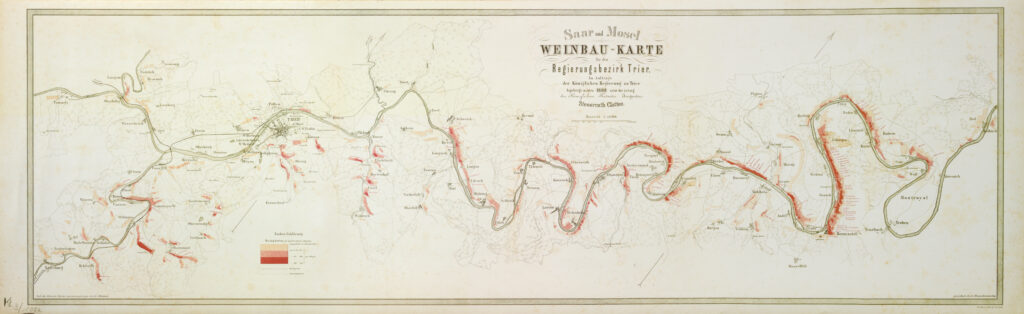
Weinbaukarte der Mosel von 1868

Mosel-Rieslinge – was unterscheidet sie von Riesling aus anderen Weinbaugebieten?

Rieslinge von der Mosel sind weltweit bekannt für ihre Eleganz, Frische und filigrane Struktur – sie gehören zu den feinsten Weißweinen der Welt, doch was unterscheidet sie von Rieslingen aus anderen Weinbauregionen?


Terroir und Boden

Der Mosel-Riesling wird stark vom einzigartigen Terroir der Region geprägt:
– die Weinberge befinden sich oft an extrem steilen Schieferhängen entlang der Mosel und ihrer Nebenflüsse Saar und Ruwer
– der Boden besteht hauptsächlich aus 400 Millionen Jahre altem Devon-Schiefer, der den Weinen eine ausgeprägte Mineralität verleiht

Klimatische Bedingungen

– das kühlere Klima der Moselregion führt zu einer längeren Reifeperiode der Trauben
– dies begünstigt die Entwicklung komplexer Aromen bei gleichzeitig moderatem Alkoholgehalt

Geschmacksprofil

Mosel-Rieslinge zeichnen sich aus durch:
– ein charakteristisches Säurespiel
– feine Fruchtaromen, insbesondere Apfel- und Pfirsichnoten
– eine ausgeprägte Mineralität, die auf den Schieferboden zurückzuführen ist

Reifepotenzial

– aufgrund ihrer höheren Säure haben Mosel-Rieslinge ein besonders hohes Reifepotenzial
– viele Weine entwickeln sich über Jahre hinweg positiv und bieten auch nach langer Lagerung ein herausragendes Geschmackserlebnis

In der Schatzkammer von Immich-Batterieberg schlummern Weine bis 1921 zurück, die die einzigartige Entwicklungsfähigkeit der Enkircher Weine belegen.

Stilistische Vielfalt

– an der Mosel werden Rieslinge in verschiedenen Süßegraden produziert, von trocken bis edelsüß
– die Region ist international auch sehr bekannt für ihre restsüßen und edelsüßen Weine, die eine Renaissance erlebt haben

Bei Immich-Batterieberg machen wir hingegen nur sporadisch Süßweine – dies geschieht in Abhängigkeit von der Entwicklung des Jahrganges und war bei uns das letzte Mal im Jahr 2018.
Diese Kombination aus einzigartigem Terroir, klimatischen Bedingungen und traditioneller Weinbaukunst macht den Mosel-Riesling zu einem unverwechselbaren und hochgeschätzten Wein, der sich deutlich von Rieslingen aus anderen Anbaugebieten abhebt.

Weinbaukarte der Mosel von 1868

Why does the Moselle have a bad image in Germany? Is that true?

The claim that the Moselle wine region has a bad reputation in Germany is misleading. Internationally, the Moselle enjoys a stellar reputation, particularly for its Rieslings.


Globally recognized among wine connoisseurs, Moselle wines are highly regarded for their quality and distinctive character. A significant portion of top-tier Moselle wines is exported, primarily to England, the USA, Scandinavia, Switzerland, and the Netherlands. At Immich-Batterieberg, for example, exports account for 60% of production.

However, the Moselle has faced challenges in its recent history:
– In the 1970s and 1980s, quality issues and overproduction damaged its image
– The 1985 glycol scandal (though unrelated to the Moselle) negatively impacted the region’s reputation

Today, Moselle wine producers face new challenges:
– Climate change: Warmer summers and extreme weather conditions demand greater efforts in vineyard management
– Labor shortages: Viticulture relies heavily on long-term workers from Eastern Europe
– Rising costs: Increases in wages, logistics, and raw materials like bottles and corks pose financial challenges
– Declining wine consumption: Post-pandemic trends show reduced global demand for wine

Steep-slope viticulture, for which the Moselle is renowned, is particularly labor-intensive, with almost no mechanization possible. Only by emphasizing quality can the region sustain its reputation and viability.

Warum hat die Mosel in Deutschland ein schlechtes Image? Stimmt das?

Häufig wird man in Deutschland mit der Behauptung konfrontiert, dass die Moselweinbauregion ein schlechtes Image hat. Tatsächlich genießt die Mosel als Weinbaugebiet insbesondere international einen ausgezeichneten Ruf – insbesondere für ihre Rieslinge.


Die Mosel ist unter Weinkennern weltweit bekannt und wird natürlich eng mit deutschem Riesling assoziiert. Ein beträchtlicher Anteil der Spitzenweine wird international exportiert, vor allem nach England und in die USA, aber auch nach Skandinavien, Schweiz, Niederlanden und in viele andere Länder Europas und der Welt. Dies ist auch bei Immich-Batterieberg der Fall. Unser Exportanteil liegt bei 60%.

Allerdings gab es in der Geschichte des Moselweinbaus auch schwierige Phasen:
– In den 1970er und 1980er Jahren kam es zu Qualitätsproblemen und Überproduktion
– Der Glykol-Skandal von 1985 (an dem die Mosel gar nicht beteiligt war, aber sehr darunter gelitten hat) führte zu einem Umdenken und einer Qualitätsoffensive

Heute steht der Weinbau an der Mosel vor neuen Herausforderungen:
– Klimawandel: nachhaltig wärmere Sommer, mehr Extremwetterlagen (Feuchtigkeit, Trockenheit), mehr Aufwand in den Weinbergen
– Arbeitskräftemangel: Ohne unsere langjährigen Mitarbeiter aus Osteuropa wäre Weinbau nicht mehr möglich. Der Spagat einer menschenwürdigen Bezahlung im Kontext des allgemeinen Kostenanstiegs sind Herausforderungen für alle Winzer und Weingüter im „geiz ist geil“ Land
– Steigende Kosten: Löhne, Logistik, Flaschen, Korken sind maximal preislich gestiegen
– Rückgang des weltweiten Weinkonsums: Während in der Coronazeit „Daydrinking“ durchaus beobachtbar war, zeigt sich jetzt eine große Zurückhaltung, auch beim Weinkonsum – ob diese nur ein Zyklus ist oder eine nachhaltige gesellschaftliche Veränderung ist, ist bisher nicht zu beurteilen

Besonders der Steillagenweinbau, für den die Mosel bekannt ist und für welchen wir uns bei Immich-Batterieberg einsetzen, steht unter Druck. Nur der Fokus auf die höchste Qualität gibt dem Weinbau in diesen anspruchsvollen Lagen eine Zukunft.

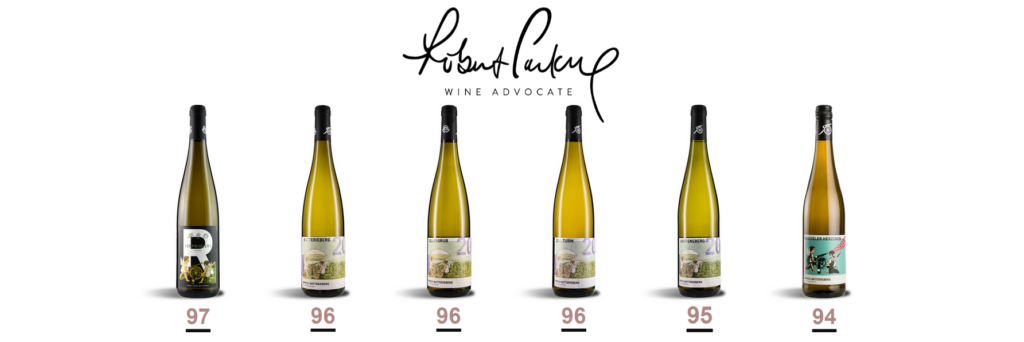
ROBERT PARKER | our ratings of vintage 2023

Stephan Reinhardt via Robert Parker

2023 ZEPPWINGERT RESERVE Riesling | 97 points

From 100+-year-old vines, the 2023 Zeppwingert Reserve is deep, pure and slightly toasty on the nose that is reminiscent of stewed apricots. Crystalline and saline on the palate, this is a rich and powerful yet vivacious Riesling with a promising finish.

2023 BATTERIEBERG Riesling | 96 points

From 80+-year-old Riesling vines on gray slate and quartzite soils that yielded only 20 hectoliters per hectare, the 2023 Batterieberg is pure, refined and saline on the stony nose. On the palate, this is a very rich and generous yet very elegant, saline, crystalline, precise and persistent Riesling that is not fully dry but enormously long in terms of structure.

2023 ZOLLTURM Riesling | 96 points

From 80+-year-old vines on gray slate and quartzite soils, the 2023 Zollturm is deep, intense and rich as well as enormously mineral and flinty on the saline nose. Full-bodied, intense and enormously mineral on the palate, this is an elegant, refined and saline but tight, intense and very complex, finely tannic and grippy Riesling with a long and promising, complex, crystalline and saline finish. There seems to be a bit more younger oak here than in the Ellergrub.

2023 ELLERGRUB Riesling | 96 points

From 80+-year-old vines on blue slate, the 2023 Ellergrub is very clear, deep and fresh on the utterly mineral and flinty nose that is saline, pure and stony and concentrated in its fleshy fruit. Round, rich and elegant on the palate, this is a remarkably pure, refined, savory and stimulating saline Ellergrub with fine tannins on the long and intense, stimulating and mouth-tickling finish. This impressive Riesling has never been better.

2023 STEFFENSBERG Riesling | 95 points

From red slate soils and exclusively ungrafted massal selections, the 2023 Steffensberg Riesling is deep, pure, intense and refined on the nose that is fascinating in its purity and aromatic intensity that intermingles with saline notes of slate shards and herbal nuances. Lush and elegant on the palate, this is an intense yet refined, mouth-filling and textural, enormously savory and sustainable Riesling with spectacular length.

2023 BRIEDELER HERZCHEN Riesling | 94 points

The 2023 Briedeler Herzchen is intense in color and flavors that indicate perfectly ripe and aromatic fruit spiced with flinty and saline notes of gray and red slate. Intense and complex on the palate, this is an elegant, refined and stimulating saline Riesling with an excellent and irresistible savory finish. This is possibly the finest Herzchen Gernot Kollmann has produced so far.

2023 ESCHEBURG Riesling | 93 points

The 2023 Escheburg is from 60-year-old Riesling vines, mainly from the Ellergrub (50%), that yielded 35 hectoliters per hectare. The wine vinified in smaller oak barrels for 10 months and opens with a reductive and stony bouquet of ripe and open fruit aromas with flinty nuances. Round and juicy on the palate, this is a dense and complex, saline and savory, super salivating and energetic Escheburg with tension, precision and character.

2023 DETONATION Riesling | 92 points

From top, super stony, organically farmed vineyards in the Enkirch, Briedel and Sennheim and bottled in early October 2024, the 2023 Detonation Riesling is pure and complex on the saline and stony nose that indicates a still young and age-worthy dry Riesling. Shallow yet savory and tensioned on the palate, this is an enormously saline and lean dry Riesling with a stimulating and finely structured, salivating finish. This is a character of purity and finesse.

2023 CAI Riesling | 91 points

The golden-yellow colored 2023 CAI Riesling Trocken is quite deep and substantial on the nose that indicates perfectly ripe, intense and elegant fruit with flinty and herbal slate notes. Nervy, vital and remarkably elegant on the palate, this is a dense, intense and juicy as well as savory dry Riesling with enough substance and concentration to balance the 1.8 grams per liter of residual sugar perfectly well. This is an impressive estate wine.

2023 ROB Pinot Noir Rosé | 89 points

The unfiltered, salmon-colored 2023 ROB Spätburgunder Rosé Trocken combines a ripe and delicate red fruit aroma with flinty/spicy slate nuances on the clear and precise but soulful nose. Medium-bodied and fresh yet remarkably complex and textured with ripe fruit, this is an elegant and harmonious yet tensioned, vinous and sustainable rosé that comes from younger vines on the Pünderich side of the Briedeler Herzchen vineyard. Here, they are rooted in red to gray slate. The grapes were fermented with natural yeasts in stainless steel tanks, and the wine remained on the full lees until bottling in July 2024, with a moderate addition of sulfur.

2023 ELBLING | 88 points

From a 50-year-old limestone vineyard in Nittel, Upper Mosel, that has been farmed organically for 20 years by Karl Sonntag who is still cultivating this cru from the Nitteler Leiterchen, the unfined, unfiltered and unsulfured 2023 Elbling unfiltriert opens with a pure, intense and somewhat untamed nose of ripe and golden berries with crushed calcareous notes. Creamy and elegant on the palate, this is a light, pure and linear yet textural and lemon-fresh finishing Elbling that fermented in stainless steel and was kept on the full lees until the bottling at the end of July 2024. Imagine a sparkling wine without bubbles but with a lees-y texture and stimulating freshness. The vineyard yielded 60 hectoliters per hectare, which is quite low for Elbling. This is a refreshing light wine that goes very well with blue mussels.

2022 MONTENEUBEL Pinot Noir | 92 points

Kollmann’s red wine is only produced in top vintages. His beautifully aromatic and fragrant Enkircher 2022 Monteneubel Spätburgunder comes from red slate soils and opens with perfectly ripe and intense dark fruit aromas intertwined with floral and also flinty slate notes. This medium-bodied and harmonious wine is silky, lush and generous on the palate yet always clear, fresh and refined thanks to fine tannins and delicate crystalline and saline acidity. The finish is tart and cleansing and adds cherry flavors. This is a highly stimulating Mosel Pinot Noir for many occasions. The vines on the Enkircher Monteneubel, which runs parallel to the Steffensberg, are 30 years old and of unknown genetics. “It won’t be a Mariafelder, because the grapes are too small and compact-berried for that,” says Kollmann, who doesn’t know anything about the rootstocks either. The wine is fermented with 100% whole clusters in 550-liter vats and macerated with the feet, while carbonic maceration takes place in the areas below. The wine is then fermented with the press wine in used barriques and remains there for almost two years until bottling.