FROM THE BARREL TO THE BOTTLE…

From the barrel to the bottle, from the bottle to you:
How our wine gets its final chapter


There are moments in winemaking that hardly anyone sees — and yet they change everything. Bottling and labeling are two such moments. While most people think of pruning, harvesting, and fermentation, something crucial happens during these final steps: our wine becomes ready to travel.

A bottling line on wheels

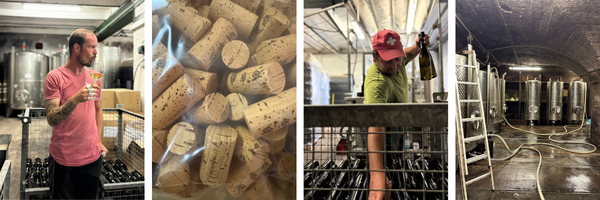
We don’t have our own bottling line – and that’s a conscious decision. Instead, we rent a mobile bottling line that comes directly to our winery. Why? Because a high-quality bottling line is a six-figure investment that would only be used a few days a year. The mobile specialists, on the other hand, bottle wine all year round – their machines are perfectly maintained, the team is experienced, and the technology is state-of-the-art. The result: gentler and more precise bottling than we could ever achieve with our own equipment.

The bottling day itself is a minor event. The equipment is rolled out, hoses are connected, and within a few hours, the wine that has been maturing in our barrels for months flows into its final home. Each bottle is filled, corked, and placed by hand in wire cages. Then it goes to our bottle storage area — and that’s where the waiting begins.

The bottle storage: quiet maturation

Not every wine leaves the winery immediately. Many of our bottles rest in storage for weeks or months before going on sale. This waiting period is no coincidence, but rather part of our philosophy. A freshly bottled wine needs time to settle — the so-called „bottle shock“ after bottling can temporarily alter the taste of the wine, making it seem closed. Only after a period of rest does the wine return to the state we know from the barrel.

Labeling takes place when you place your order.

This is where it gets particularly interesting: our bottles are stored in the warehouse without labels. They are only labeled when an order is received — using our own labeling machine on site.

The reason? Our wines are shipped to numerous countries, and each country has its own labeling requirements. Different languages, different mandatory information, different formats. A wine that goes to Norway needs a different label than one that ends up in Japan or the US. Instead of labeling thousands of bottles in advance with a standard label and thus losing flexibility, we label on demand — tailored precisely to the respective market.

Does that sound like more work? It is. But it gives us control over ensuring that every bottle leaves the factory exactly as it should. And it avoids waste: no leftover stock with outdated labels, no compromises on labeling.

Craftsmanship right down to the last step

From the vineyard to the shipping box — at Immich-Batterieberg, every step is carefully thought out. Bottling and labeling may be the invisible chapters, but they tell the same story as the wine itself: precision, patience, and the commitment to leave nothing to chance.

Curious? Experience the taste of our steep-slope Riesling — directly from the Moselle to your home.

Discover our online shop now and order your favorite wine. Each bottle is freshly labeled for you and prepared for shipping.

Would you like to try it first? Write to us — we will be happy to put together a personalized sample package for you.
VOM FASS IN DIE FLASCHE…

Vom Fass in die Flasche, von der Flasche zu Ihnen:
Wie unser Wein sein letztes Kapitel bekommt


Es gibt Momente in der Weinbereitung, die kaum jemand sieht – und die doch alles verändern. Die Abfüllung und Etikettierung gehören dazu. Während die meisten an Rebschnitt, Lese und Gärung denken, passiert in diesen letzten Schritten etwas Entscheidendes: Unser Wein wird reisefertig.

Eine Abfüllanlage auf Rädern

Wir besitzen keine eigene Abfüllanlage – und das ist eine bewusste Entscheidung. Stattdessen mieten wir eine mobile Abfüllanlage, die direkt zu uns in das Weingut kommt. Warum? Weil eine hochwertige Abfüllanlage eine Investition im sechsstelligen Bereich ist, die nur an wenigen Tagen im Jahr genutzt würde. Die mobilen Spezialisten dagegen füllen das ganze Jahr über ab – ihre Maschinen sind perfekt gewartet, das Team routiniert, die Technik auf dem neuesten Stand. Das Ergebnis: Eine schonendere und präzisere Abfüllung, als wir sie mit einer eigenen Anlage je erreichen könnten.

Der Abfülltag selbst ist ein kleines Ereignis. Die Anlage rollt an, Schläuche werden verbunden, und innerhalb weniger Stunden fließt der Wein, der monatelang in unseren Fässern gereift ist, in sein endgültiges Zuhause. Jede Flasche gefüllt, verkorkt und von Hand in Gitterboxen gelegt. Dann wandert sie in unser Flaschenlager – und dort beginnt das Warten.

Das Flaschenlager: Stille Reife

Nicht jeder Wein verlässt das Weingut sofort. Viele unserer Flaschen ruhen Wochen oder Monate im Lager, bevor sie in den Verkauf gehen. Dieses Warten ist kein Zufall, sondern Teil unserer Philosophie. Ein frisch abgefüllter Wein braucht Zeit, um sich zu sammeln – der sogenannte „Flaschenschock“ nach der Abfüllung kann den Geschmack des Weines vorrübergehend verändern, sodass er verschlossen wirkt. Erst nach einer Ruhephase zeigt sich der Wein wieder so, wie wir ihn aus dem Fass kennen.

Etikettiert wird erst, wenn Sie bestellen

Hier wird es besonders interessant: Unsere Flaschen liegen im Lager ohne Etikett. Erst wenn eine Bestellung eingeht, wird etikettiert – und zwar mit unserer eigenen Etikettiermaschine direkt vor Ort.

Der Grund? Unsere Weine werden in zahlreiche Länder verschickt, und jedes Land hat eigene Anforderungen an die Etikettierung. Andere Sprachen, andere Pflichtangaben, andere Formate. Ein Wein, der nach Norwegen geht, braucht ein anderes Etikett als einer, der in Japan oder in den USA landet. Statt Tausende von Flaschen vorab mit einem Standard-Etikett zu versehen und damit die Flexibilität zu verlieren, etikettieren wir nach Abruf – passgenau für den jeweiligen Markt.

Das klingt nach mehr Aufwand? Ist es auch. Aber es gibt uns die Kontrolle darüber, dass jede Flasche exakt so das Haus verlässt, wie sie soll. Und es vermeidet Verschwendung: Keine Restbestände mit veralteten Etiketten, keine Kompromisse bei der Kennzeichnung.

Handwerk bis zum letzten Schritt

Vom Weinberg bis zum Versandkarton – bei Immich-Batterieberg ist jeder Schritt durchdacht. Die Abfüllung und Etikettierung mögen die unsichtbaren Kapitel sein, aber sie erzählen dieselbe Geschichte wie der Wein selbst: Präzision, Geduld und der Anspruch, nichts dem Zufall zu überlassen.

Neugierig geworden? Erleben Sie den Geschmack unserer Steillagen-Rieslinge – direkt von der Mosel zu Ihnen nach Hause.

Jetzt unseren Online-Shop entdecken und Ihren Lieblingswein bestellen. Jede Flasche wird frisch für Sie etikettiert und versandfertig gemacht.

Sie möchten zuerst probieren? Schreiben Sie uns – wir stellen Ihnen gerne ein individuelles Probierpaket zusammen.

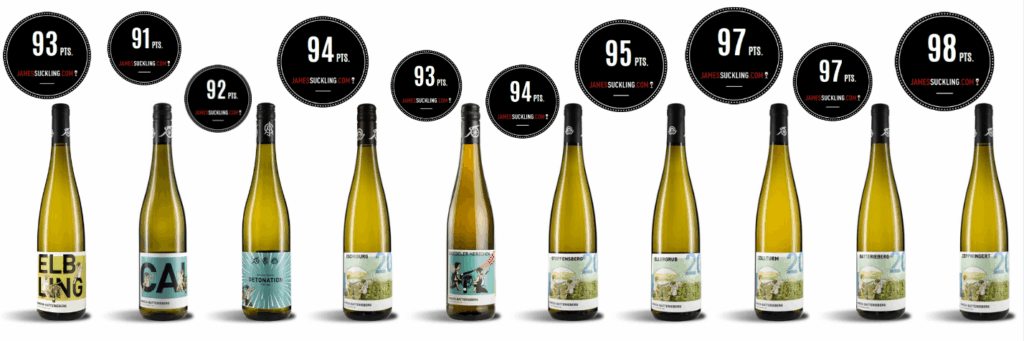
JAMES SUCKLING | our ratings of vintage 2024

Stuart Pigott via James Suckling

2024 ZEPPWINGERT Riesling | 98 points

The way this wine effortlessly marries enormous concentration with wonderful lightness and subtlety is breathtaking. The peach and Amalfi lemon flavors seem to flow into one another. Then comes the shining slatey notes of the extremely focused finish. Fermented and matured in one 500-liter oak cask, so very limited production. From organically grown grapes. Drink or hold.

2024 BATTERIEBERG Riesling | 97 points

Just smelling this extraordinary dry Mosel wine is like being beamed back to the 18th century, and with every swirl of the glass there are more mint and Amalfi lemon zest aromas. And that’s only what’s on the surface. This is a deep well of wet-stone minerality. Extremely long, focused finish. From organically grown grapes. Drinkable now, but best from 2027.

2024 ZOLLTURM Riesling | 96 points

At first very flinty, then with aeration a wide spectrum of candied citrus aromas unfurls, with hints of dried tarragon and sage. Very concentrated, with a complex interplay of leesy creaminess and herbal, minerally character on the medium-bodied palate. Very long, intensely salty finish. From organically grown grapes. Drinkable now, but best from 2026.

2024 ELLERGRUB Riesling | 95 points

This needs a moment to open up, but then it shows lovely aromas of orange blossoms. Seriously concentrated and wonderfully silky on the graceful, medium-bodied palate. Then touches of orange pith bitterness and slatey minerality kick in and give this incredible tension in the very long finish. From organically grown grapes. Drinkable now, but best from 2027.

2024 STEFFENSBERG Riesling | 94 points

This youthful wine shows impressive peachy ripeness with touches of flint, dried pears and apples. It needs to fully integrate, and each swirl of the glass aids this process. Then comes a wave of dried sage, flint and yeast in the long, complex finish. From organically grown grapes from ungrafted vines. Drinkable now, but best from 2027.

2024 BRIEDELER HERZCHEN Riesling | 93 points

Very cool, reserved, crisp and racy. On one level this is a typical 2024 Mosel wine, but on another it is radical, with positive austerity on the bone-dry, barely medium-bodied palate. Flinty right through the long, cool finish. From organically grown grapes. Drink or hold.

2024 ESCHEBURG Riesling | 94 points

Fascinating nose of candied oranges, dried apricots, dried flowers and flint. Sleek and compact, with excellent concentration and complexity on the medium-bodied palate. A remarkable expression of this underrated site. The salty minerality comes through in the expressive finish. From organically grown grapes. Drink or hold.

2024 DETONATION Riesling | 92 points

The dried apple and candied orange aromas are married to steely acidity on the barely medium-bodied palate. On the austere side, but with plenty of drive and a touch of orange rind bitterness in the rather bold finish. From over 40-year-old vines. Drink or hold.

2024 CAI Riesling | 91 points

With its aromas of licorice, candied oranges, quince and flint, this is different from almost everything else in this entry-level category. It’s a sleek, light-bodied dry riesling with stacks of dried herb, preserved lemon and slate character. Long, very crisp finish. Drink or hold.

2024 ELBLING | 93 points

The nutty apple aromas of this unique wine are compelling, although it’s light-bodied. Impressive depth on the mid-palate and long, crisp, filigreed finish. Hard to believe this has just under 9% alcohol because of the serious slaty minerality. Long, cool finish. From organically grown grapes. No sulfites added. Unfiltered. Drink now.

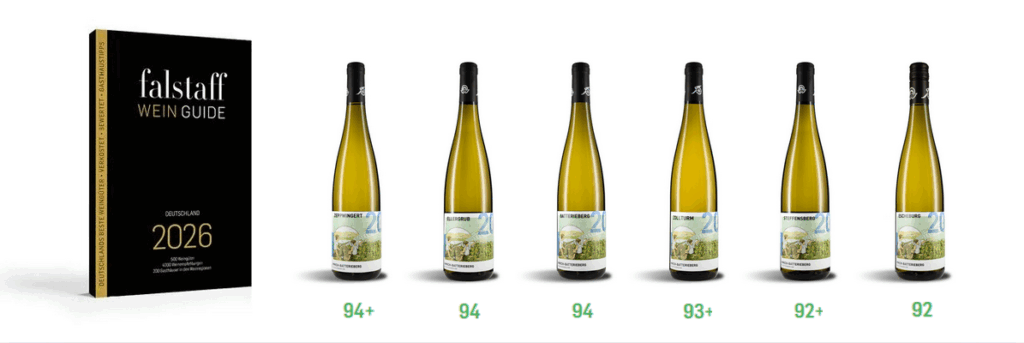
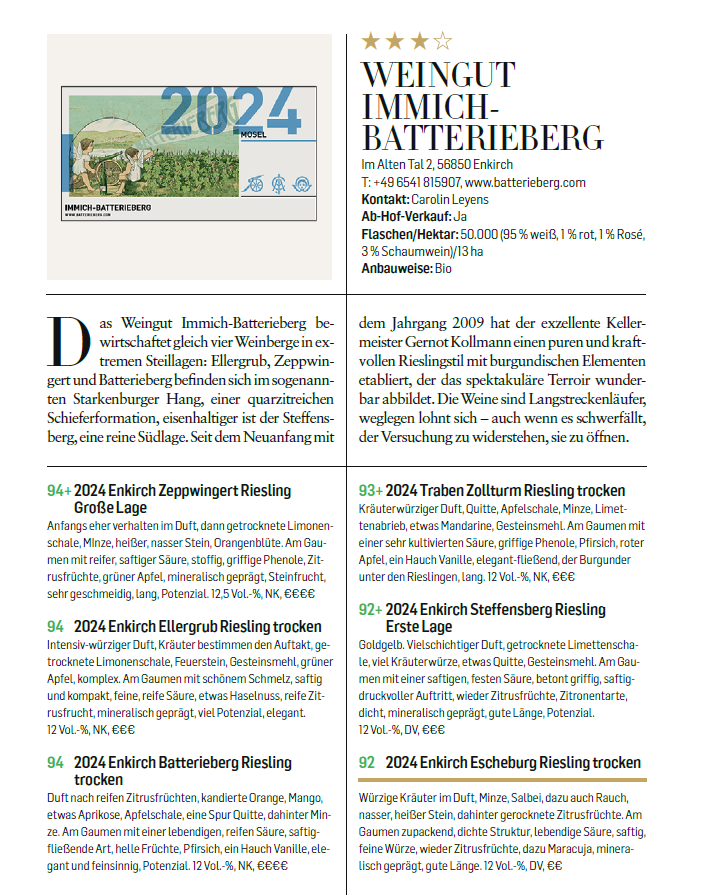
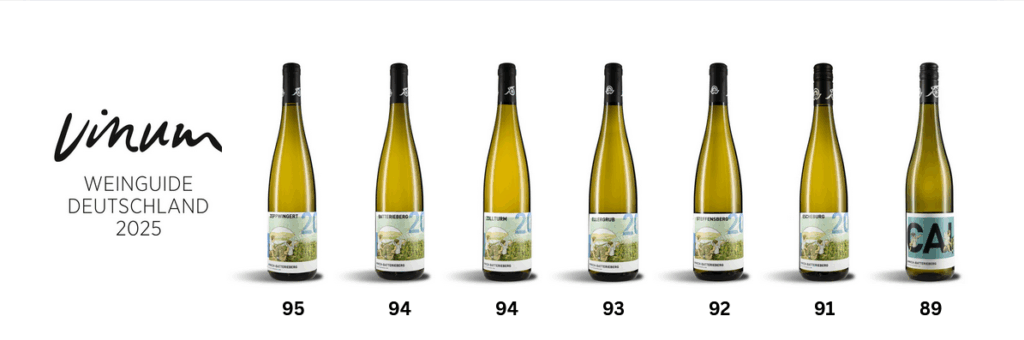
VINUM WINEGUIDE 2025

Was war passiert? Waren es unsere Geschmackspapillen an den beiden Tagen der Probe oder ist es nur der Jahrgang, der uns eher entgegenkommt? Jedenfalls konnten wir nicht anders, als diesen strukturierten Weinen hohe Punkte zu geben, die da vor uns standen.

Schon der CAI ist zum Vorjahr qualitativ einige Stufen nach oben gestiegen. Ein Wein, der zu 80 Prozent im Edelstahl und zu 20 Prozent im Holz ausgebaut wird, bevor er cuvéetiert wird. Säurefrische und Spannung zeichnen ihn aus.

Schon der Riesling Escheburg 2024 wird von einem hohen Anteil wurzelechter Reben aus 60 Jahre alten Parzellen gewonnen. Der animierende Säuredruck, der dem Wein erhöhte Spannung mitgibt, legt Zeugnis davon ab.

Mit jedem nächsten Wein schraubten sich die Punktzahlen nach oben, bis mit 95 das Ende der Fahnenstange erreicht war. Und diese erklommen sowohl Batterieberg 2024, als auch der Zeppwingert 2024, beide aus Enkirch.

Der Batterieberg, dessen Urbarmachung zwischen 1841 und 1845 vollzogen wurde, hat die Größe von 1,1 Hektar, plan gemessen. Die Trauben des Hangfußes werden für die Produktion dieses Weins nicht verwendet. Seidigen Glanz versprüht dieses aus lediglich 25 Hektoliter pro Hektar hergestellte Edelgewächs.

Der Zeppwingert lässt sich den Schneid nicht abkaufen und zieht gleich mit erhöhter Fruchtkonzentration und dadurch bedingter Festigkeit. Kein Wein, so sagt Gernot Kollmann, Betriebsleiter und Kellermeister, liegt über vier Gramm pro Liter Restsüße. In diesem Jahr Jahr wird die Opulenz auf das Angenehmste im Zaun gehalten und geführt. Es strahlen wieder vier Sterne über dem Enkircher Weingut!

2024 ZEPPWINGERT Riesling | 95 Punkte

2024 BATTERIEBERG Riesling | 95 Punkte

2024 ZOLLTURM Riesling | 94 Punkte

2024 ELLERGRUB Riesling | 93 Punkte

2024 STEFFENSBERG Riesling | 93 Punkte

2024 ESCHEBURG Riesling | 91 Punkte | VINUM TIPP!

2024 CAI Riesling | 89 Punkte

VINTAGE 2024

Vintage 2024 – A year of clarity and patience


When we look back on the 2024 vintage, we remember a season that demanded everything from us in the vineyard – and that is precisely why it produced wines that we are particularly proud to present.

The year began slowly, with cool temperatures and slow development in the vines. Fortunately, we were spared late frost, but the high pressure from downy mildew made it one of the most labor-intensive years of the last decade. Many hours of manual labor, meticulous canopy management, and uncompromising selection in our steep slopes characterized the summer.

Yields were low, but what we were able to harvest was exceptional. Healthy, aromatically concentrated grapes with a fine, ripe acidity – the foundation for wines that are lively, clear, and deeply structured.

The musts showed tension and precision from the outset, and the result are wines with radiant freshness, ripe, lively acidity, and impressive depth – all wines are uncompromisingly dry and bear the unmistakable signature of our vineyards.

The collection of wines from the 2024 vintage impressively shows how much energy can be found in a cool, challenging year. Batterieberg, Ellergrub, Zeppwingert, and Steffensberg present themselves as purist, dense, and long – with that salty minerality that cannot be described, only tasted.

A vintage that challenged and rewarded us – with its clarity, precision, and tranquility.

Find our vintage 2024 in the shop

JAHRGANG 2024

Der Jahrgang 2024 – Ein Jahr der Klarheit und Geduld


Wenn wir auf den Jahrgang 2024 zurückblicken, dann erinnern wir uns an eine Saison, die uns im Weinberg alles abverlangt hat – und gerade deshalb Weine hervorgebracht hat, die wir mit besonderem Stolz präsentieren.

Das Jahr begann verhalten, mit kühlen Temperaturen und langsamer Entwicklung in den Reben. Vom Spätfrost blieben wir glücklicherweise verschont, doch der hohe Druck durch Peronospora machte das Jahr zu einem der arbeitsintensivsten der letzten Dekade. Viele Stunden Handarbeit, akribische Laubpflege und kompromisslose Selektion in unseren Steillagen prägten den Sommer.

Die Erträge waren gering, doch das, was wir ernten konnten, war außergewöhnlich. Gesunde, aromatisch konzentrierte Trauben mit einer feinen, reifen Säure – die Basis für Weine, die zugleich lebendig, klar und von tiefer Struktur sind.

Die Moste zeigten von Anfang Spannung und Präzision und das Ergebnis sind Weine mit strahlender Frische, reifer, lebendiger Säure und beeindruckender Tiefe – alle Weine sind kompromisslos trocken und tragen die unverwechselbare Handschrift unserer Lagen.

Die Kollektion der Weine des Jahrgangs 2024 zeigt eindrucksvoll, wie viel Energie in einem kühlen, fordernden Jahr stecken kann. Batterieberg, Ellergrub, Zeppwingert und Steffensberg präsentieren sich puristisch, dicht und lang – mit jener salzigen Mineralität, die man nicht beschreiben, sondern nur schmecken kann.

Ein Jahrgang, der uns gefordert und belohnt hat – in seiner Klarheit, Präzision und Ruhe.

Der Jahrgang 2024 im Shop

What is the „Cool Climate“ Trend?

The Mosel is called the „mother“ of the Cool Climate trend because it was historically the first and most significant wine region to systematically demonstrate the potential of cooler climate zones for wine production.


Techniques and traditions that are now characteristic of Cool Climate winemaking emerged along the Mosel as early as the Middle Ages. The steep slate slopes with their southern exposure maximize sun exposure, while the cool climate ensures slow ripening and pronounced acidity structure – a hallmark of high-quality Cool Climate wines.

Riesling, which finds perhaps its purest expression along the Mosel, became the archetype of Cool Climate wine: elegant, mineral, with vibrant acidity and complex aromatics. This style inspired winemakers worldwide to seek similar conditions – from the Finger Lakes region in New York to the Rheingau and Tasmania.


Particularly influential was the Mosel philosophy of „terroir-driven winemaking“: the conviction that cool sites with mineral soils can produce wines of particular finesse and longevity. This mindset revolutionized international winemaking from the 1980s onwards, as quality was increasingly prioritized over quantity. The Mosel proved that great wines don’t necessarily have to come from warm regions – a paradigm shift that made the modern Cool Climate trend possible.

Today, the wine industry worldwide faces the challenge of reconciling centuries-old traditions with the necessity of adapting to climate change. Flexibility and innovation will be crucial – while simultaneously preserving the cultural identity and quality standards of wine regions.


Climate change is fundamentally altering winemaking and has various effects on wine:
• shifted vegetation periods: Earlier flowering, earlier ripening, and earlier harvests (sometimes 2-4 weeks)
• higher sugar content: Leads to higher alcohol levels in wines
• declining acidity levels: Impairs freshness and aging potential
• changed aroma spectra: Fewer typical varietal aromas, more ripeness-related aromas

Southern wine regions are particularly affected, but classic German wine regions are also suffering from this development.
DThe term „Cool Climate“ in relation to wine has its origins in the 1960s and emerged in the so-called „New World“ of winemaking, in countries like Australia, New Zealand, the USA, or Canada. At that time, winemakers began specifically developing cooler regions for viticulture and highlighting the special characteristics of these wines


In Europe, especially in classic wine countries like Germany or France, winemaking in cooler regions had always existed, but the targeted positioning and conscious emphasis on „Cool Climate“ character only became popular with the international trend from the New World.
Since the 1990s, the topic has gained significant importance in the global wine scene, not least due to climate change and the associated changes in traditional and new wine regions.

The development of „Cool Climate“ winemaking shows several interesting trends:
1. new growing regions like England, Tasmania, New Zealand, northern parts of Germany, higher elevations in Chile and Argentina are developing
2. even traditional wine regions must adapt to warmer conditions – whether through higher elevations, north-facing vineyards, or new grape varieties
3. consumers increasingly appreciate the elegance, freshness, and lower alcohol content of these wines
4. particularly varieties like Riesling, Chardonnay, Pinot Noir, and Sauvignon Blanc benefit from cooler climates and are at the center of the „Cool Climate“ approach
5. „Cool Climate“ winemakers are often pioneers in sustainable and organic cultivation methods, as they must work with natural conditions
6. these wines often position themselves in the premium segment, as production costs are higher and yields are lower

The Mosel is a classic example of a „Cool Climate“ wine region for several important reasons:
Geographic and Climatic Factors
• northern location: Located at approximately 50° north latitude, the Mosel is at the northern boundary of commercial viticulture
• cool climate: Average temperatures during the growing season are significantly lower than in more southern wine regions – the annual average temperature typically ranges between 9-10°C
• longer ripening time: The grapes require a longer growing season here, leading to more complex aromas
Terroir Characteristics
• river as climate regulator: the Mosel itself acts as a temperature buffer and reflects sunlight onto the vineyardsbr
• steep slate slopes: these store warmth during the day and release it at night, partially compensating for the cooler climatebr
• exposure advantage: the mostly south-facing steep slopes capture maximum sun exposure, which is crucial in this northern region
Wine Characteristics
• high natural acidity: Mosel wines (especially Riesling) are characterized by a pronounced, vibrant acidity structure
• lower alcohol content: typically between 7-12%, significantly lower than wines from warmer regions
• delicate aromatics: fine fruit aromas with citrus notes, green apple, often mineral components and characteristic elegance

The Mosel belongs to the „Cool Climate“ regions that are particularly accentuated by climate change.

Immich-Batterieberg is a „Cool Climate“ winery. Our approach in the vineyards and cellar, in sustainable and organic cultivation and natural fermentation, specifically brings out the fascination of Mosel wines. Acidity is ideally integrated and doesn’t dominate. We are always committed to low alcohol, which is why we fundamentally don’t chaptalize. Our sometimes very sparse, stony, and dry steep slopes produce lighter and lower-alcohol wines than „fat“ flat sites. Our old vines with old genetics additionally have lower must weights than modern clonal plantings.


Cool Climate has tradition at the Mosel and at Immich-Batterieberg!

Was ist der „Cool Climate“ Trend?

Die Mosel wird als „Mutter“ des Cool Climate Trends bezeichnet, weil sie historisch die erste und bedeutendste Weinregion war, die systematisch das Potenzial kühler Klimazonen für die Weinproduktion demonstrierte.


An der Mosel entstanden bereits im Mittelalter Techniken und Traditionen, die heute als charakteristisch für den Cool Climate Weinbau gelten. Die steilen Schieferhänge mit ihrer südlichen Ausrichtung maximieren die Sonneneinstrahlung, während das kühle Klima für langsame Reifung und ausgeprägte Säurestruktur sorgt – ein Markenzeichen hochwertiger Cool Climate Weine.

Der Riesling, der an der Mosel seine wohl reinste Ausprägung findet, wurde zum Archetyp des Cool Climate Weins: elegant, mineralisch, mit lebendiger Säure und komplexer Aromatik.Diese Stilistik inspirierte Winzer weltweit, ähnliche Bedingungen zu suchen – von der Finger Lakes Region in New York über das Rheingau bis hin zu Tasmanien.


Besonders prägend war die Mosel-Philosophie des „terroir-driven winemaking“: Die Überzeugung, dass kühle Standorte mit mineralischen Böden Weine von besonderer Finesse und Langlebigkeit hervorbringen können. Diese Denkweise revolutionierte den internationalen Weinbau ab den 1980er Jahren, als Qualität zunehmend über Quantität gestellt wurde. Die Mosel bewies, dass große Weine nicht unbedingt aus warmen Regionen stammen müssen – ein Paradigmenwechsel, der den modernen Cool Climate Trend erst möglich machte.

Heute steht die Weinbranche weltweit vor der Herausforderung Jahrhunderte alte Traditionen mit der Notwendigkeit zur Anpassung an den Klimawandel in Einklang zu bringen. Flexibilität und Innovation werden entscheidend sein – wobei gleichzeitig die kulturelle Identität und die Qualitätsstandards der Weinregionen bewahrt werden müssen.


Der Klimawandel verändert den Weinbau fundamental und hat verschiedenste Auswirkungen auf den Wein:
• verschobene Vegetationsperioden: frühere Blüte, frühere Reife und frühere Ernten (teilweise 2-4 Wochen)
• höhere Zuckergehalte: führt zu höheren Alkoholwerten in Weinen
• sinkende Säuregehalte: beeinflusst die Frische und Lagerfähigkeit
• veränderte Aromaspektren: weniger typische Sortenaromen, mehr reifebedingte Aromen

Insbesondere südlichere Weinbauregionen sind stark betroffen, aber klassische deutsche Weinbaugebiete leiden ebenfalls unter dieser Entwicklung.
Der Begriff „Cool Climate“ im Zusammenhang mit Wein hat seine Ursprünge in den 1960er Jahren, und entstand in der sogenannten „Neuen Welt“ des Weinbaus, also in Ländern wie Australien, Neuseeland, den USA oder Kanada. Damals begannen Winzer, gezielt kühlere Regionen für den Weinbau zu erschließen und die besonderen Eigenschaften dieser Weine hervorzuheben.


In Europa, speziell in klassischen Weinbauländern wie Deutschland oder Frankreich, gab es zwar schon immer Weinbau in kühleren Regionen, doch die gezielte Positionierung und das bewusste Herausstellen des „Cool Climate“-Charakters wurde erst mit dem internationalen Trend aus der Neuen Welt populär.
Seit den 1990er Jahren hat das Thema in der globalen Weinszene deutlich an Bedeutung gewonnen, nicht zuletzt durch den Klimawandel und die damit verbundenen Veränderungen in traditionellen und neuen Weinregionen.

Die Entwicklung des „Cool Climate“ Weinbaus zeigt mehrere interessante Trends:
1. neue Anbaugebiete wie England, Tasmanien, Neuseeland, nördliche Teile von Deutschland, höhere Lagen in Chile und Argentinien entwickeln sich
2. selbst traditionelle Weinbauregionen müssen sich auf wärmere Bedingungen einstellen – sei es durch Höherlagen, nordexponierte Weinberge oder neue Rebsorten
3. Konsumenten schätzen zunehmend die Eleganz, Frische und niedrigeren Alkoholgehalte dieser Weine
4. besonders Sorten wie Riesling, Chardonnay, Pinot Noir und Sauvignon Blanc profitieren von kühleren Klimata und stehen im Zentrum des „Cool Climate“- Ansatzes
5. „Cool Climate“ Winzer sind oft Pioniere bei nachhaltigen und biologischen Anbaumethoden, da sie mit den natürlichen Gegebenheiten arbeiten müssen
6. diese Weine positionieren sich häufig im Premium-Segment, da die Produktionskosten höher sind und die Erträge geringer

Die Mosel ist ein klassisches Beispiel einer „Cool Climate“ Weinregion, und das aus mehreren wichtigen Gründen:
Geografische und klimatische Faktoren
• nördliche Lage: mit einer Lage auf etwa 50° nördlicher Breite befindet sich die Mosel an der nördlichen Grenze des kkomerziellen Weinbaus
• kühles Klima: die durchschnittlichen Temperaturen während der Vegetationsperiode sind deutlich niedriger als in südlicheren Weinregionen – die Jahresdurchschnittstemperatur liegt typischerweise zwischen 9-10°C
• längere Reifezeit: die Trauben benötigen hier eine längere Vegetationsperiode, was zu komplexeren Aromen führt
Terroir-Besonderheiten
• Flusslauf als Klimaregulator: die Mosel selbst wirkt als Temperaturpuffer und reflektiert Sonnenlicht auf die Weinberge
• steile Schieferhänge: diese speichern tagsüber Wärme und geben sie nachts ab, was das kühlere Klima teilweise kompensiert
• Expositionsvorteil: die meist nach Süden ausgerichteten Steillagen fangen das Maximum an Sonneneinstrahlung ein, was in dieser nördlichen Region entscheidend ist
Weincharakteristik
• hohe natürliche Säure: die Moselweine (vor allem Riesling) zeichnen sich durch eine prägnante, lebendige Säurestruktur aus
• niedrigerer Alkoholgehalt: typischerweise zwischen 7-12%, deutlich niedriger als Weine aus wärmeren Regionen
• filigrane Aromatik: feine Fruchtaromen mit Zitrusnoten, grünem Apfel, oft mineralischen Komponenten und einer charakteristischen Eleganz

Die Mosel gehört zu den „Cool Climate“-Regionen, die durch den Klimawandel besonders akzentuiert wird.

Immich-Batterieberg ist ein „Cool Climate“ Weingut. Unsere Herangehensweise in den Weinbergen und im Keller, im nachhaltigen und ökologischen Anbau und die natürliche Fermentation arbeitet die Faszination der Weine an der Mosel gezielt heraus. Die Säure wird hierbei ideal eingebunden und steht nicht im Vordergrund. Wir fühlen uns immer dem niedrigen Alkohol verpflichtet, deshalb wird grundsätzlich nicht chaptalisiert. Unsere teilweise sehr kargen, steinigen und trockene Steillagen erzeugen leichtere und alkoholärmere Weine als „fette“ Flachlagen. Unsere alten Reben mit alter Genetik haben zusätzlich geringere Mostgewichte als moderne Klonanlagen.


Cool Climate hat an der Mosel und bei Immich-Batterieberg Tradition!

What distinguishes Moselle Riesling from Rieslings of other regions?

Moselle Riesling stands apart due to its unique terroir, climate, and traditional winemaking methods:


Terroir and Soil

– the region’s vineyards are located on steep slate slopes along the Moselle and its tributaries (Saar and Ruwer)
– the 400-million-year-old Devonian slate imparts a distinct minerality to the wines

Climatic Conditions

The cooler climate allows for a longer ripening period, promoting complex aromas and moderate alcohol levels.

Taste Profile

– characteristic acidity
– refined fruit aromas, especially apple and peach notes
– a pronounced minerality due to the slate soils

Ageing Potential

– the high acidity provides Moselle Rieslings with excellent ageing capacity
– some wines, including those from Immich-Batterieberg, age gracefully for decades

Stylistic Diversity

– Moselle Rieslings are produced in a range of sweetness levels, from dry to noble sweet
– while internationally renowned for residual sweet and noble sweet wines, Immich-Batterieberg primarily focuses on dry styles, producing sweet wines only occasionally (most recently in 2018)

This combination of terroir, climate, and tradition ensures that Moselle Rieslings are distinctive, highly valued, and incomparable to Rieslings from other regions.

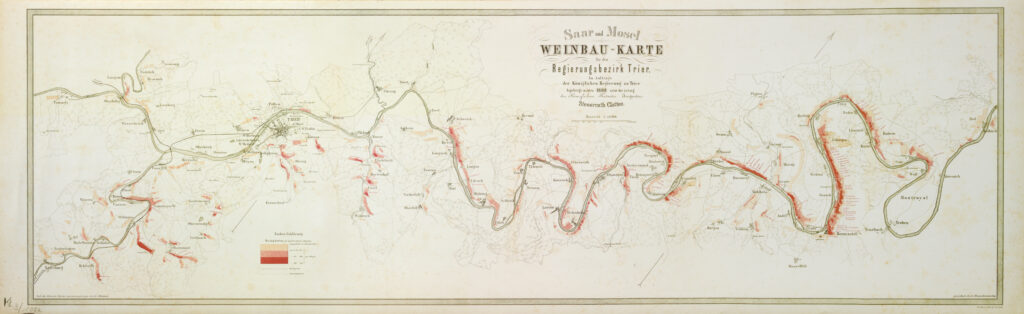
Weinbaukarte der Mosel von 1868